Tsomoriri
5000mtrs
June through Mid September
Tso Moriri Lake Travel Guide
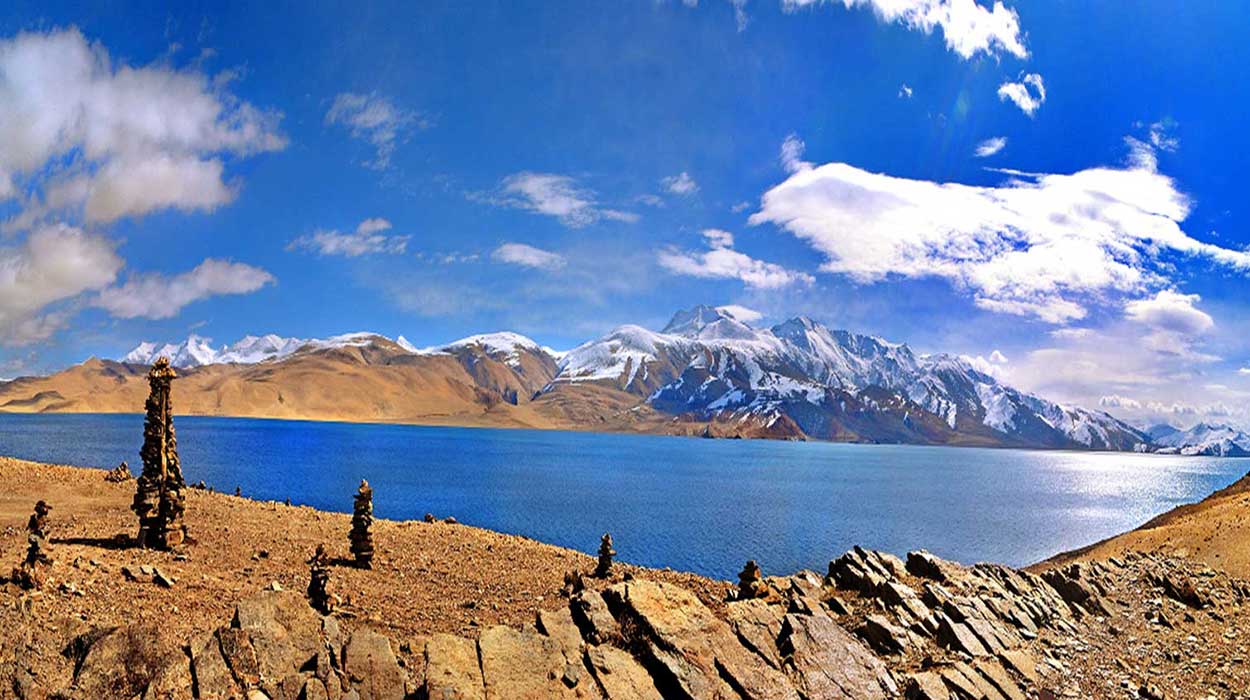
Set amid the vast and remote landscapes of the Changthang Plateau, Tso Moriri is one of Ladakh’s most spectacular high-altitude lakes. Surrounded by barren mountains, snow-covered peaks, open grasslands and wetlands, the lake offers a quieter and more secluded experience than many of Ladakh’s better-known destinations.
Tso Moriri lies at an altitude of approximately 4,522 metres or 14,836 feet. Its deep blue water stretches for about 26 kilometres through the Rupshu region of southeastern Ladakh. The lake is enclosed by mountain ranges and has no visible external drainage, creating a fragile high-altitude wetland environment.
The settlement of Korzok stands on the lake’s northwestern shore. This traditional Changpa village, its monastery, barley fields and grazing grounds form the cultural heart of the Tso Moriri region.
About Tso Moriri Lake
Tso Moriri, sometimes written as Tsomoriri or Lake Moriri, is among the most beautiful natural attractions in Ladakh. Unlike Pangong Lake, which extends across an international boundary, Tso Moriri lies entirely within India.
The lake occupies a broad valley in the Changthang region and is surrounded by mountains rising above 6,000 metres. Its colour changes throughout the day, appearing deep blue under clear skies, turquoise in bright sunlight and silver or grey when clouds pass over the valley.
The surrounding wetlands, marshes and open plains provide an important habitat for migratory birds and high-altitude wildlife. Because the ecosystem is extremely sensitive, the lake and its surrounding landscape must be explored responsibly.
Best Places to Visit Around Tso Moriri
1. Tso Moriri Lake Shore
The lake itself is the main attraction. Its immense blue surface, empty shoreline and surrounding mountains create one of Ladakh’s most peaceful landscapes. The best views are found from designated areas near Korzok and along approved sections of the access road.
Early morning is often calm and suitable for reflections and photography. By afternoon, winds may become stronger and the lake’s surface can become rougher. Visitors should not approach sensitive marshes or nesting areas.
2. Korzok Village
Korzok is the principal settlement beside Tso Moriri and one of Ladakh’s highest permanently inhabited villages. Traditional stone and mud houses stand near cultivated fields and grazing grounds overlooking the lake.
A walk through Korzok provides an opportunity to observe village life, traditional architecture, prayer walls and the difficult agricultural conditions of the high Changthang Plateau. Visitors should respect private homes, fields and livestock enclosures.
3. Korzok Monastery
Korzok Monastery overlooks the village and the northwestern shore of Tso Moriri. It is an important Buddhist centre for the local Changpa community and contains prayer halls, sacred images, murals and traditional religious objects.
The monastery’s elevated location provides impressive views across the village, cultivated fields and lake. Visitors should dress modestly, remain quiet during prayers and ask before taking photographs inside.
4. Korzok Village Viewpoint
The slopes above Korzok offer wide views of the village, monastery, green fields and Tso Moriri. From higher ground, visitors can appreciate the remarkable contrast between the fertile village area and the surrounding cold desert mountains.
Walk only on established paths and avoid climbing onto unstable slopes, religious structures or private land.
5. Kyagar Tso
Kyagar Tso, also called Kiagar Tso or Kyagar Lake, is a smaller high-altitude lake encountered on the road between Sumdo and Tso Moriri. Its pale blue water, open plains and surrounding mountains make it a beautiful photography stop.
Wild asses and other animals may sometimes be observed in the wider landscape. Visitors should view wildlife from a distance and avoid leaving the designated road.
6. Puga Valley
Puga Valley is known for its geothermal landscape, mineral deposits, hot springs and broad open grasslands. Steam rising from the ground gives parts of the valley an unusual appearance.
The ground around geothermal areas can be unstable and extremely hot. Visitors should remain on safe paths, avoid touching hot water and follow all instructions given by local authorities or guides.
7. Sumdo Village
Sumdo is a small settlement and an important junction on the approach to Tso Moriri. The route divides here toward Korzok, Puga and other parts of Changthang.
The village is surrounded by dramatic mountain scenery and is commonly used as a short tea, meal or permit-check stop during the journey.
8. Mahe Bridge
Mahe Bridge is an important checkpoint and road junction on the route from Leh to Tso Moriri. Travellers may be required to show identification and permits before continuing into the protected Changthang region.
From Mahe, the road turns away from the Indus River and enters a more remote landscape through Sumdo and the open plateau.
9. Chumathang Hot Springs
Chumathang is a riverside settlement on the route between Leh and Tso Moriri. It is known for naturally heated mineral springs emerging beside the Indus River.
Small restaurants and guesthouses make Chumathang a convenient refreshment or overnight stop. Visitors should use caution around hot-water channels and avoid entering unsafe geothermal areas.
10. Upshi
Upshi is an important road junction southeast of Leh. Travellers heading to Tso Moriri usually follow the Indus Valley road from Upshi toward Chumathang, Mahe and Sumdo.
Restaurants, basic shops and checkpoints may be available here, making it a useful place to purchase water or refreshments before continuing farther into Changthang.
11. Tso Kar Lake
Tso Kar is another important high-altitude wetland on the Changthang Plateau. It lies west of Tso Moriri and can be included in a circular journey returning toward Leh through the More Plains and Tanglang La.
The lake is known for its salt deposits, open landscapes and birdlife. Wildlife viewing should always take place from a safe distance without entering marshes or nesting areas.
12. Thukje Village
Thukje is a small settlement near Tso Kar. It has a monastery, traditional homes and wide views over the surrounding plains. Basic guesthouses and homestays may operate during the main travel season.
13. More Plains
The More Plains form a vast high-altitude plateau on the Leh–Manali road. Travellers returning from Tso Moriri through Tso Kar may cross this remarkable open landscape before ascending toward Tanglang La.
The seemingly endless plain, distant mountains and changing light make this one of Ladakh’s most memorable driving experiences.
14. Tanglang La
Tanglang La is a high mountain pass on the Leh–Manali highway and may be crossed on the return journey from Tso Kar to Leh. The pass offers impressive views but can experience cold winds, snow and rapidly changing weather.
Visitors should keep stops brief because of the high altitude and should not undertake strenuous activity at the pass.
Wildlife and Birdlife
Tso Moriri and the surrounding Changthang landscape support a remarkable variety of wildlife adapted to cold, dry and high-altitude conditions. Sightings are never guaranteed, but patient travellers may observe animals across the open plains and mountain slopes.
Birds
- Black-necked crane
- Bar-headed goose
- Brown-headed gull
- Great crested grebe
- Ruddy shelduck
- Various migratory waterbirds
Mammals
- Kiang or Tibetan wild ass
- Himalayan marmot
- Blue sheep
- Tibetan wolf
- Red fox
- Snow leopard in the wider region
Birds may be breeding or nesting around wetlands during summer. Visitors should not walk toward nests, use drones, play loud music or attempt to attract animals with food.
Changpa Nomadic Culture
The Changthang region is traditionally inhabited by the Changpa, a pastoral community whose livelihood is closely linked to sheep, yak and especially pashmina-producing goats. Families move between seasonal grazing grounds according to weather and pasture conditions.
Changpa life is adapted to extreme cold, strong winds and limited vegetation. Wool, livestock, dairy products and pashmina have long played important roles in the local economy.
Travellers may encounter herders and livestock camps during the journey. These are working homes rather than tourist exhibits. Always seek permission before approaching camps, photographing residents or entering grazing areas.
Korzok Gustor Festival
Korzok Monastery hosts the traditional Korzok Gustor, a Buddhist monastic festival featuring prayers, religious ceremonies and masked dances. Changpa families from different parts of the plateau may gather in Korzok during the celebration.
The festival follows the Tibetan lunar calendar, so the dates change each year. Travellers planning to attend should confirm the current schedule and reserve accommodation well in advance.
Suggested Travel Routes
Two-Day Tso Moriri Journey
Leh → Upshi → Chumathang → Mahe → Sumdo → Kyagar Tso → Korzok → Tso Moriri
Day 2:
Sunrise at Tso Moriri → Korzok Monastery → Chumathang → Upshi → Leh
This is the most direct itinerary but involves long driving hours. It is suitable for travellers who have already acclimatized properly in Leh.
Three-Day Tso Moriri and Tso Kar Circuit
Leh → Upshi → Chumathang → Mahe → Sumdo → Kyagar Tso → Tso Moriri
Day 2:
Korzok → Tso Moriri exploration → Puga Valley → Tso Kar → Thukje
Day 3:
Tso Kar → More Plains → Tanglang La → Upshi → Leh
This circular route provides a more complete experience of Changthang and avoids returning over the same road. Road conditions should be confirmed before travel.
Pangong Lake to Tso Moriri
Approximate Travel Information
| Journey | Approximate Travel Time | Travel Notes |
|---|---|---|
| Leh to Tso Moriri | About 7 to 9 hours | Depends on road, weather, stops and checkpoints. |
| Chumathang to Tso Moriri | About 3 to 4 hours | Route continues through Mahe, Sumdo and Kyagar Tso. |
| Tso Moriri to Tso Kar | About 3 to 5 hours | Road conditions can vary considerably. |
| Tso Kar to Leh | About 5 to 7 hours | Usually via More Plains, Tanglang La and Upshi. |
Distances and driving times are approximate. Mountain roads, construction, checkpoints and weather can significantly change journey times.
Accommodation at Tso Moriri
Most accommodation is located in or near Korzok. Options generally include simple hotels, guesthouses, family-run homestays and seasonal camps. Facilities are more basic than those available in Leh.
Guesthouses and Hotels
These provide private or shared rooms with basic bedding. Hot water, heating and electricity may be available only during limited hours.
Village Homestays
Homestays offer simple rooms, local meals and an opportunity to experience life in Korzok while directly supporting village families.
Seasonal Camps
Camps normally operate during the warmer travel season. Night temperatures remain low, so warm bedding and insulated tents are important.
Alternative Stops
Chumathang and the Tso Kar area may offer basic overnight accommodation for travellers following a circular route.
Best Time to Visit Tso Moriri
May and June
The landscape begins opening after winter, although nights remain extremely cold. Some camps and guesthouses may still be preparing for the main season. Snow may remain visible on surrounding mountains.
July and August
These are among the most accessible months. Daytime conditions are generally milder, seasonal accommodation is operating and migratory birds may be present. However, strong sun, cold winds and sudden weather changes are still common.
September
September often offers clear skies, quieter roads and beautiful autumn light. Temperatures begin falling rapidly, particularly after sunset.
October to April
Winter in Changthang is severe. Temperatures can fall far below freezing, accommodation becomes very limited and roads may be affected by snow and ice. Winter journeys require specialist planning and should not be treated as normal sightseeing trips.
Permits and Identification
Tso Moriri lies in a protected and strategically sensitive region. Visitors may need an appropriate permit depending on nationality, current regulations and the route being used.
Altitude and Acclimatization
Tso Moriri is considerably higher than Leh. Visitors should spend at least two or three nights acclimatizing in Leh before travelling to the lake. Going directly to Tso Moriri immediately after arriving by air can increase the risk of altitude sickness.
Drink sufficient water, eat light meals, avoid alcohol, avoid smoking and do not undertake strenuous activity during the first days at altitude.
Food and Facilities
Korzok has small restaurants, guesthouse kitchens and seasonal dining tents. Meals normally include simple Ladakhi, Tibetan and North Indian dishes such as rice, dal, noodles, vegetables, momos and thukpa.
Shops, banking facilities, medical services and repair services are extremely limited. Mobile signals and internet connections may be weak, intermittent or unavailable.
- Carry sufficient cash from Leh.
- Carry personal medicines and basic first-aid supplies.
- Keep emergency food and drinking water in the vehicle.
- Download maps and important documents before leaving Leh.
- Do not depend on continuous mobile communication.
Fuel and Vehicle Preparation
Reliable fuel stations are limited across the Changthang region. Vehicles should begin the journey with a full tank, and additional fuel arrangements may be necessary for longer routes involving Tso Kar, Hanle or Pangong Lake.
The vehicle should be in good mechanical condition and carry a usable spare tyre, jack, basic tools and emergency supplies. Travelling with an experienced Ladakhi driver is strongly recommended.
What to Carry
- Valid identification and all required permits
- Warm thermal layers and a windproof jacket
- Gloves, woollen cap and warm socks
- High-protection sunscreen and lip balm
- Sunglasses with strong ultraviolet protection
- Reusable water bottle
- Personal medicines and first-aid kit
- Cash for accommodation, meals and local purchases
- Power bank and spare camera batteries
- Dry snacks and emergency food
- Comfortable walking shoes
- Reusable rubbish bag
Responsible Travel Guidelines
- Never drive off-road or onto grasslands, wetlands or the lakeshore.
- Use only designated parking areas and approved roads.
- Do not approach nesting birds or wild animals.
- Never feed wildlife.
- Do not swim or wash in the lake.
- Do not use soap, shampoo or chemicals near natural water sources.
- Avoid loud music and unnecessary vehicle horns.
- Do not leave plastic bottles, food packaging or cigarette waste.
- Ask permission before photographing local residents.
- Do not enter nomadic camps, fields or homes without an invitation.
- Follow photography rules inside Korzok Monastery.
- Do not fly drones without official permission.
- Use local homestays, guides, drivers and village businesses where possible.
Why Visit Tso Moriri?
Tso Moriri offers one of Ladakh’s most powerful wilderness experiences. Its immense blue lake, isolated mountain ranges, traditional Changpa culture, migratory birds and open plateau landscapes create a destination unlike anywhere else in the Himalayas.
The journey is long and the altitude is demanding, but travellers who arrive well acclimatized and prepared are rewarded with extraordinary silence, clear night skies and an unforgettable sense of remoteness.
More than a scenic attraction, Tso Moriri is a fragile living ecosystem and the homeland of high-altitude communities. Visiting slowly, respectfully and responsibly helps protect this remarkable landscape for future generations.
Permit requirements, road access, accommodation, festival dates and local regulations can change. Confirm current conditions before beginning the journey.
About this guide
Published by the Ladakh.com Editorial Team to help travelers understand Ladakh and plan more carefully. Conditions involving permits, roads, weather, altitude and local access can change, so reconfirm time-sensitive information before travel. About Ladakh.com