
Leh
30mnts
Thiksey Monastery: History, Sacred Paintings and the Great Maitreya Buddha
Explore the founding of Thiksey, its Gelug Buddhist heritage, tiered Himalayan architecture, sacred temples, murals, manuscripts, monastic prayers and magnificent Maitreya Buddha overlooking the Indus Valley.
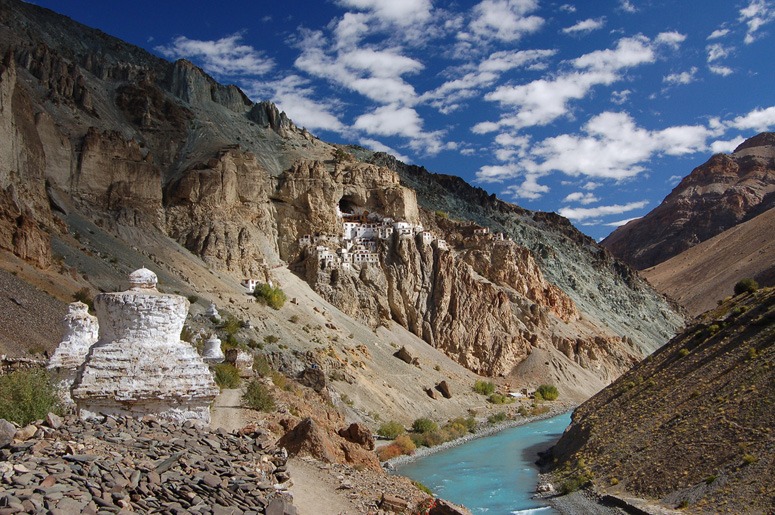
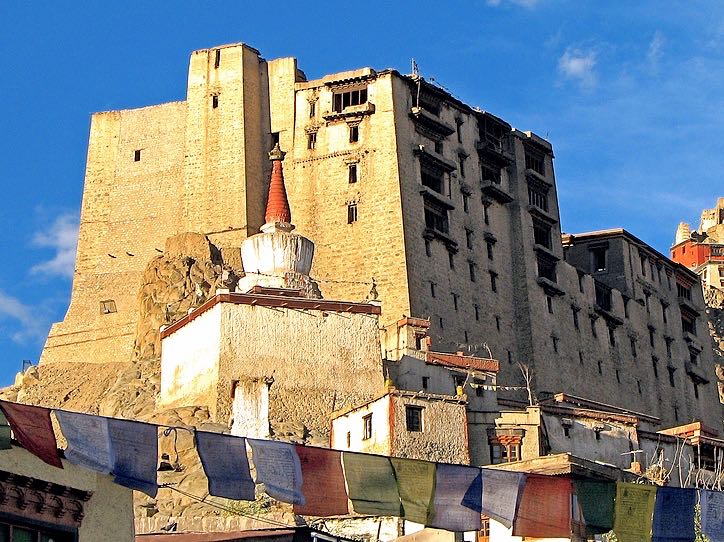
Thiksey Monastery rises in a spectacular series of white, ochre and red buildings above the Indus Valley, approximately 19 kilometres southeast of Leh. Built across the slope of a rocky hill, the monastery appears almost like a complete fortified town, with temples, prayer halls, monks' residences, kitchens, courtyards and sacred chambers arranged on several ascending levels.
Also written as Thikse, Thiksay or Tiksey, the monastery belongs to the Gelug school of Tibetan Buddhism, commonly called the Yellow Hat tradition. It is one of the largest and most recognisable monastic complexes in central Ladakh.
Thiksey is frequently compared with the Potala Palace in Lhasa because of its dramatic arrangement of buildings climbing a hill. The comparison is architectural rather than historical: Thiksey is a distinct Ladakhi monastery with its own founders, religious lineage and local traditions.
The monastery remains an active centre of Buddhist worship and education. Monks live, study, pray and conduct ceremonies here, while residents of the surrounding villages visit for blessings, festivals and important religious observances.
Why Thiksey Monastery Is Important
Thiksey is important because it brings together nearly six centuries of Ladakhi Buddhist history with an active contemporary monastic community. Its temples contain sacred statues, wall paintings, ritual objects, scriptures, thangkas and images of major Buddhist teachers and deities.
The monastery also demonstrates how Tibetan Buddhist institutions were adapted to Ladakh's landscape, climate and political history. Its hilltop position provided visibility and protection, while its terraced form allowed a large religious community to function within a compact mountain site.
Thiksey became one of the major Gelug centres in Ladakh and developed relationships with other monasteries, villages, royal patrons and religious estates throughout the region.
Heritage clarification: Thiksey is one of Ladakh's most significant monasteries, but it is not currently inscribed as an individual UNESCO World Heritage Site. It should be described as an important Buddhist and architectural heritage monument rather than as a UNESCO-listed monastery.
The Gelug School and Je Tsongkhapa
The history of Thiksey is closely connected with the rise of the Gelug school of Tibetan Buddhism. The Gelug tradition was established by the great Buddhist scholar and teacher Je Tsongkhapa, who lived from 1357 to 1419.
Tsongkhapa emphasised disciplined monastic life, philosophical study, ethical conduct, meditation and careful interpretation of Buddhist scriptures. His followers became known for wearing yellow ceremonial hats, leading to the popular name Yellow Hat school.
During the early 15th century, Tsongkhapa sent disciples to distant regions to spread his teachings. This movement eventually reached Ladakh, where several important monasteries adopted the Gelug tradition.
Thiksey, Spituk and Likir became major Gelug centres, helping establish the school as an important religious force within Ladakh.
Who Founded Thiksey Monastery?
Thiksey's foundation is associated with the Buddhist teacher Jangsem Sherab Zangpo, whose name is also written in different sources as Sherab Zangpo or Pon Sherab Raspa.
According to monastery tradition, Sherab Zangpo was sent to Ladakh as part of the Gelug school's expansion. He carried a sacred image or relic associated with Je Tsongkhapa and sought the support of the Ladakhi king for the establishment of the new tradition.
The king is said to have welcomed the religious mission and assisted Sherab Zangpo in founding an early Gelug temple at Stagmo, several kilometres north of present-day Thiksey.
That first establishment was known as Lhakhang Serpo, meaning the Yellow Temple. It provided an early base from which the Gelug teachings spread in this part of Ladakh.
Sherab Zangpo and Palden Zangpo
The construction of the larger monastery at its present location is generally associated with Palden Zangpo, described in different accounts as Sherab Zangpo's disciple, relative or nephew.
Palden Zangpo continued his teacher's religious work and developed the larger hilltop complex during the middle of the 15th century.
Thiksey should therefore not be attributed to one builder alone. Its creation involved the teaching mission of Sherab Zangpo, the work of Palden Zangpo, Ladakhi royal support, local craftsmen, monastic patrons and generations of later builders.
The Legend of the Sacred Offering
One of Thiksey's best-known foundation stories concerns a ritual offering called a torma. Tormas are sculpted offerings made from flour and butter and used in Tibetan Buddhist ceremonies.
According to tradition, Sherab Zangpo and Palden Zangpo were conducting a ritual near the earlier Yellow Temple at Stagmo. After the ceremony, they carried the torma to a rocky place from which it was to be offered or disposed of according to ritual custom.
Before they could complete the action, two crows are said to have carried away the ceremonial plate. The birds transported it across the hill and placed it carefully on a rock without disturbing the arrangement of the offering.
Palden Zangpo interpreted this unusual event as a sacred indication of where the new monastery should be built. The location became the site of the present Thiksey Monastery.
History and tradition: The torma story belongs to Thiksey's sacred foundation tradition. It communicates the belief that the monastery's location was spiritually selected, but it should not be presented as independently verified historical evidence.
Historical Development of Thiksey
Earlier Buddhist Activity
The Thiksey area had religious importance before the construction of the present Gelug complex. Historical traditions connect the locality with earlier Buddhist temples and sacred sites.
Early 15th Century
Sherab Zangpo arrived in Ladakh during the spread of the Gelug school and established the Yellow Temple at nearby Stagmo.
Mid-15th Century
Palden Zangpo founded or expanded the main monastery at the present Thiksey hilltop location.
Later Ladakhi Kingdom
Royal patrons, village estates and religious donors supported the monastery. Additional temples, residences and administrative buildings were constructed over time.
18th Century and Later
Members of Ladakh's royal family were sometimes appointed or educated as religious figures at major monasteries, strengthening connections between the monarchy and Thiksey.
1980
The celebrated Maitreya Temple and its monumental statue were completed in connection with the visit of the 14th Dalai Lama to Ladakh.
Present Day
Thiksey continues as a living Gelug monastery, religious school, pilgrimage destination and important centre of Ladakhi cultural life.
Architecture of Thiksey Monastery
A Monastic Town Built Up a Mountain
Thiksey is not a single temple. It is a large group of interconnected buildings spread over the slope of a hill. Its arrangement creates the appearance of a complete monastic settlement rising upward from the village.
Residential and service buildings occupy many of the lower levels, while the principal temples, assembly halls and sacred chambers are generally found higher in the complex.
This vertical organisation gives architectural expression to a movement from everyday activity toward increasingly sacred spaces.
The monastery is often described as having approximately twelve levels, although the irregular terrain means that these do not function like the identical floors of a modern building.
Narrow passages, steep stairways, courtyards and roof terraces connect the different sections. From the upper levels, visitors can see the Indus Valley, Thiksey village, cultivated fields and the distant Stok mountain range.
Traditional Building Materials
Thiksey was constructed primarily with materials available in Ladakh's high-altitude environment. These included stone foundations, sun-dried mud bricks, compacted earth, timber beams and layers of willow branches and mud used for roofs.
Thick earthen walls help insulate interiors against Ladakh's cold winters and large changes between daytime and nighttime temperatures.
The walls often slope slightly inward as they rise, creating strength and the fortress-like appearance characteristic of Tibetan and Ladakhi architecture.
Whitewashed walls reflect strong sunlight, while red, ochre and dark bands identify important religious structures. Windows are generally small and deeply set, reducing heat loss and protecting interiors from severe weather.
Why Thiksey Resembles the Potala Palace
Visitors frequently call Thiksey the Little Potala because its whitewashed buildings rise in multiple levels toward red and ochre religious structures at the summit.
The visual similarity does not mean that Thiksey was built as an exact copy of the Potala Palace. Both structures belong to a broader Tibetan Himalayan architectural world in which large religious and administrative buildings were arranged dramatically on elevated ground.
Thiksey developed as a Ladakhi monastery, while the Potala in Lhasa served on a far greater scale as the historic palace and governmental centre of the Dalai Lamas.
Main Temples and Sacred Spaces
Maitreya Temple
The monastery's most famous modern temple contains the monumental Maitreya Buddha, whose seated figure rises through two storeys of the building.
Dukhang
The main assembly hall is used for daily prayers, chanting, teachings and major ceremonies. It contains sacred images, thangkas, columns and seating for monks.
Gonkhang
The protector chapel contains powerful guardian deities connected with the defence of Buddhist teachings and the removal of spiritual obstacles.
Tara Temple
This sacred space contains images connected with Tara, the enlightened female Bodhisattva associated with compassion, protection and swift assistance.
Lamokhang
Located in the upper monastery, this important temple contains sacred scriptures, ritual objects and images connected with advanced religious teaching.
Library and Manuscript Rooms
Thiksey preserves Buddhist scriptures, commentaries and religious texts used in monastic education, ritual and philosophical study.
Chortens
Chortens within and around the complex represent the enlightened mind of the Buddha and may contain sacred texts, relics or consecrated offerings.
Rooftop Terraces
The upper terraces offer extensive views over the Indus Valley and reveal how closely the monastery's architecture is connected with its surrounding landscape.
The Great Maitreya Buddha
Thiksey's most celebrated image is the monumental statue of Maitreya, the Buddha of the future. The seated figure is approximately 15 metres high and rises through two levels of the specially constructed Maitreya Temple.
Maitreya is believed to be the future Buddha who will appear in the world when the teachings of Shakyamuni Buddha have declined and been forgotten. He represents hope, loving-kindness and the future renewal of the Dharma.
The Thiksey statue presents Maitreya in royal Bodhisattva form rather than in the simple robes of a historical Buddha. He wears an elaborate crown, jewellery and richly decorated garments.
His calm expression, finely painted face and enormous scale create a powerful experience for visitors standing at the lower and upper viewing levels.
When Was the Statue Made?
The Maitreya statue is not a surviving object from the monastery's 15th-century foundation. It was created for a new temple associated with the 14th Dalai Lama's visit to Ladakh around 1980.
Traditional artists and craftsmen worked for several years to complete the clay sculpture, painted surface, crown, jewellery and surrounding decoration.
The statue demonstrates that Ladakhi sacred art is not only ancient. Traditional techniques continue to be practised and adapted for major contemporary religious projects.
The Religious Meaning of Maitreya
Maitreya currently resides, according to Buddhist cosmology, in the Tushita heavenly realm. He waits there until the conditions are suitable for his birth in the human world.
Devotion to Maitreya expresses the belief that wisdom and compassion will continue even after the present age of Buddhist teaching has passed.
His image therefore represents the future potential of humanity, the continuity of Buddhist teachings and the possibility of awakening for all living beings.
The Paintings and Murals of Thiksey
Thiksey contains paintings from different periods rather than one single original programme. As the monastery expanded and temples were repaired, new murals, thangkas and decorative schemes were created.
The painted interiors include Buddhas, Bodhisattvas, Gelug lineage masters, meditation deities, guardians, mandalas and scenes illustrating Buddhist teachings.
Visitors should understand that not every visible painting is medieval. Some rooms contain older murals, while others preserve later repainting, restoration or modern sacred artwork.
Major Artistic Areas
From an art-historical perspective, the most important spaces include the main Dukhang, the protector chapel or Gonkhang, smaller shrine rooms and the modern Chamba Lhakhang containing the Maitreya Buddha.
Together, these spaces demonstrate several kinds of Himalayan Buddhist art: monumental clay sculpture, wall painting, fabric thangkas, carved wood, ritual metalwork and religious manuscript production.
What the Paintings Represent
Buddhist paintings are not simply decoration. Their colours, gestures, objects, body positions and surrounding figures communicate specific religious teachings.
The paintings may assist with meditation, identify a teaching lineage, present an enlightened realm or communicate the qualities of wisdom, compassion and protection.
- Shakyamuni Buddha, the historical Buddha
- Je Tsongkhapa and masters of the Gelug lineage
- Maitreya, the future Buddha
- Avalokiteshvara, the Bodhisattva of compassion
- Manjushri, the Bodhisattva of wisdom
- Tara in her peaceful and protective forms
- Medicine Buddha and healing deities
- Wrathful guardians and Dharma protectors
- Mandalas representing enlightened worlds
- Offering goddesses, celestial beings and auspicious symbols
Peaceful and Wrathful Deities
Visitors sometimes misunderstand the fierce figures found in protector chapels. Their flames, skull ornaments, weapons and powerful expressions do not necessarily represent evil.
In Vajrayana Buddhism, wrathful deities often express the forceful energy of compassion. Their terrifying forms symbolise the destruction of ignorance, greed, hatred and obstacles to spiritual understanding.
Some protector images are covered or shown only during specific rituals. Visitors should respect instructions concerning restricted rooms and photography.
How Traditional Thiksey Murals Were Made
Wall paintings were generally applied to prepared layers of mud plaster, clay, fine earth and binding materials. Artists carefully smoothed the surface before drawing the composition.
Sacred figures were created according to systems of iconometric proportion. These systems determined the relationship between the face, torso, limbs, lotus throne, hand gestures and ritual objects.
Colours were traditionally produced from mineral, earth and organic pigments. Artists used reds, yellows, greens, blues, whites and blacks to distinguish families of deities and create highly detailed sacred worlds.
A master painter supervised the work because accuracy was religiously important. An incorrect gesture, attribute or body proportion could change the identity and meaning of a deity.
Thangkas, Manuscripts and Ritual Objects
Thiksey's artistic heritage extends beyond its wall paintings. The monastery preserves portable scroll paintings known as thangkas, Buddhist scriptures, ritual instruments, offering vessels and statues made from clay, wood and metal.
Thangkas can be rolled for storage and opened during teachings, initiations and festivals. They allow sacred images to be moved between temples or displayed only on appropriate ceremonial occasions.
Manuscripts preserve the words of the Buddha, philosophical commentaries, ritual instructions, biographies and prayer texts. Their value is religious, historical and intellectual.
The Main Assembly Hall
The Dukhang is the centre of communal monastic life. Rows of low seats are arranged for monks, while the principal sacred images and the seat of the presiding lama occupy important positions within the hall.
Long painted or fabric hangings descend from the ceiling. Columns, wall paintings, thangkas and offering tables create a richly layered sacred interior.
During prayer, monks chant scriptures accompanied at certain moments by drums, cymbals, bells, horns and ritual instruments.
Morning Prayer at Thiksey
Experiencing a Living Buddhist Tradition
Thiksey is especially known among visitors for its early morning prayer ceremony. Monks gather in the assembly hall to chant texts, make offerings and perform the daily liturgy.
Young monks may serve butter tea or simple food during longer prayer sessions. The ceremony is part of their religious routine and should not be treated as a performance arranged for tourists.
Prayer times can change according to the season, monastery schedule and special ceremonies. Visitors should confirm the current time locally and arrive early without disturbing the monks.
Meaning of the Morning Ceremony
Monastic prayer may include taking refuge in the Buddha, Dharma and Sangha; generating compassion for all beings; reciting lineage prayers; offering food, light and incense; and dedicating spiritual merit.
The deep chanting and musical instruments are not intended merely to create atmosphere. Sound, rhythm, visualisation and ritual gesture are integrated parts of Buddhist practice.
Visitors may sit quietly in the space indicated by the monastery, but should avoid walking around, talking or taking intrusive photographs during the ceremony.
Monastic Education
A monastery such as Thiksey is a place of education as well as worship. Monks study Tibetan language, memorise prayers, learn ritual performance and receive instruction in Buddhist philosophy.
Advanced monastic education includes logic, debate, ethics, psychology, Madhyamaka philosophy, monastic discipline and the study of major Indian Buddhist texts.
Traditional debate helps monks test arguments and develop a precise understanding of philosophical ideas. Questions and answers are accompanied by characteristic hand claps and energetic gestures.
Thiksey Gustor Festival
Annual Festival of Sacred Masked Dances
Thiksey's major annual celebration is the Thiksey Gustor Festival. It is held according to the Tibetan lunar calendar, usually during the colder part of the year.
The term Gustor is commonly interpreted in relation to ritual offerings made during the festival. Monks conduct prayers intended to remove obstacles and protect the community.
Sacred masked dances called Cham are performed in the monastery courtyard. Monks wear elaborate robes and masks representing Buddhist protectors, teachers and symbolic forces.
These dances are not ordinary entertainment. Their movements form part of a ritual tradition through which Buddhist teachings are expressed visually and harmful influences are symbolically overcome.
Festival dates change each year because they follow the lunar calendar. Travellers should verify the official dates before planning a visit.
The Meaning of Cham Dance
Cham combines meditation, ritual movement, costume, music and sacred symbolism. Each character has a defined identity and role within the ceremony.
Wrathful masks may symbolise enlightened energy confronting ignorance and destructive behaviour. Animal masks and skeletal figures may communicate teachings about impermanence, death and the consequences of human actions.
Drums, long horns and cymbals accompany the dancers. The festival attracts monks, local villagers, pilgrims and visitors from other regions.
Women and Buddhist Education
The wider Thiksey religious community has also been associated with initiatives supporting Buddhist nuns and female religious education.
Historically, Himalayan nunneries often received fewer resources than monasteries for men. Contemporary efforts have sought to improve education, housing, healthcare and opportunities for advanced Buddhist study among nuns.
Visitors should remember that nunneries and monastic schools are living institutions. Entry should occur only where permitted and without interrupting classes or private religious activity.
Conservation of Thiksey Monastery
Maintaining a large earthen monastery is a continuous challenge. Traditional roofs require regular repair because rain, snow and melting ice can allow moisture to enter walls and painted rooms.
Earthquakes, temperature changes, strong sunlight, dust and increasing visitor numbers can also affect the historic buildings.
Conservation requires a careful balance between preserving traditional materials and providing safe facilities for monks and visitors. Modern cement, granite, synthetic paints or unsuitable waterproof layers may alter the historic appearance and behave differently from traditional mud construction.
Repairs should therefore involve monastery authorities, traditional craftsmen, structural specialists and professional conservators familiar with Ladakhi architecture.
Protecting the Paintings
- Never touch wall paintings or sculptures.
- Do not lean against painted pillars or temple walls.
- Follow all interior photography restrictions.
- Never use flash near ancient pigments or thangkas.
- Do not move ritual objects for a photograph.
- Avoid overcrowding small shrine rooms.
- Respect any temple that is closed for prayer or conservation.
How to Reach Thiksey Monastery
Road Route from Leh
Thiksey is located approximately 19 kilometres southeast of Leh along the main road through the Indus Valley. The journey normally takes around 30 to 45 minutes, depending on traffic, roadwork and the starting point in Leh.
Taxis, private cars, motorcycles and organised sightseeing vehicles can reach the monastery. Local buses may also operate along the route, but schedules should be confirmed in Leh.
A road climbs toward the monastery entrance, although exploring the complex still requires walking on steps, slopes and uneven surfaces.
Accessibility
Thiksey is built on a steep hill and contains many stairs, narrow passages and uneven courtyards. Full access can therefore be difficult for visitors with limited mobility.
Some lower sections may be easier to reach by vehicle, but the upper temples generally require climbing. Travellers with mobility or heart conditions should proceed slowly and ask locally which areas can be reached most comfortably.
Best Time to Visit
Thiksey can be visited throughout much of the year, but the most comfortable period is generally from May through October.
- May and June: Pleasant daytime conditions and fresh scenery across the Indus Valley.
- July and August: Warmest period and the busiest tourism season.
- September: Clear skies, good visibility and generally fewer visitors.
- October: Colder mornings, autumn colours and quieter conditions.
- Winter: A peaceful experience, but temperatures can be extremely low and some visitor services may be reduced.
Best Time of Day
Early morning is one of the most rewarding times to visit because the monastery may hold its daily prayer ceremony and the first sunlight illuminates the Indus Valley.
Morning light is also excellent for viewing the monastery from the approach road. Later in the day, the upper terraces provide wide views across fields, villages and mountain ranges.
Temple opening hours and prayer schedules can change. Visitors should confirm current arrangements locally rather than relying only on older online information.
Altitude and Acclimatization
Thiksey stands at roughly 3,500 to 3,600 metres above sea level. Visitors who have recently flown into Leh may still be affected by high altitude.
Spend sufficient time acclimatizing before undertaking active sightseeing. Walk slowly, drink water regularly and avoid heavy exertion during the first days after arrival.
Headache, nausea, dizziness, unusual exhaustion and difficulty sleeping can be symptoms of altitude illness. Worsening breathlessness, confusion or inability to walk normally requires urgent descent and medical attention.
Visitor Etiquette
Respecting a Living Monastery
- Dress modestly inside temples and prayer halls.
- Remove hats before entering sacred rooms.
- Keep voices low throughout the monastery.
- Do not interrupt monks during prayer or study.
- Ask before photographing monks or local worshippers.
- Follow signs regarding photography and restricted areas.
- Walk clockwise around chortens and sacred structures.
- Do not sit on monks' prayer seats.
- Do not point your feet toward statues, scriptures or the altar.
- Never touch paintings, ritual objects or manuscripts.
- Supervise children closely inside temples.
- Do not fly drones without official permission.
Places to Visit with Thiksey
Shey Palace and Monastery
The former royal centre of Ladakh contains palace ruins, temples and a major copper-gilt image of Shakyamuni Buddha.
Hemis Monastery
One of Ladakh's largest and wealthiest monasteries, belonging to the Drukpa Kagyu tradition and famous for the Hemis Festival.
Stakna Monastery
A smaller monastery occupying a dramatic rocky hill above the Indus River and offering beautiful valley views.
Matho Monastery
Known for its Sakya Buddhist tradition, historic art and annual festival involving the famous Matho oracle monks.
Sindhu Ghat
A peaceful ceremonial and riverside area along the Indus, located between Leh and the monasteries of the upper valley.
Stok Palace
The historic residence associated with Ladakh's royal family, containing collections of jewellery, clothing, weapons and ceremonial objects.
Suggested Half-Day Monastery Tour
- Leave Leh early in the morning.
- Attend morning prayers at Thiksey when permitted.
- Visit the main assembly hall and Maitreya Temple.
- Walk carefully to the upper terraces for Indus Valley views.
- Continue to Shey Palace and Monastery.
- Visit Sindhu Ghat or Stakna before returning to Leh.
Visitors who wish to include Hemis should allow a longer day and avoid rushing through active prayer spaces.
Responsible Travel at Thiksey
- Carry a refillable water bottle.
- Avoid single-use plastic and packaged litter.
- Take all non-biodegradable waste back to Leh.
- Use local guides and locally operated transport.
- Purchase authentic handicrafts from responsible sellers.
- Do not enter private monastic rooms.
- Remain on established paths and stairways.
- Avoid loud music and intrusive photography.
- Make donations only through recognised monastery channels.
Important Facts About Thiksey
- Thiksey is one of the largest monastic complexes in central Ladakh.
- It belongs to the Gelug or Yellow Hat school of Tibetan Buddhism.
- Its early history is associated with Sherab Zangpo and Palden Zangpo.
- The present monastery developed during the 15th century.
- Its layered hilltop architecture is often compared with the Potala Palace in Lhasa.
- The famous Maitreya statue is approximately 15 metres high.
- The Maitreya Temple is a modern addition completed around 1980.
- The monastery contains murals, thangkas, sculptures, scriptures and ritual objects from different periods.
- Morning prayer offers visitors an opportunity to respectfully experience Thiksey as a living religious institution.
- The annual Thiksey Gustor Festival includes prayers and sacred Cham dances.
- Thiksey is an important heritage monument but is not currently an individual UNESCO World Heritage Site.
Why Every Visitor Should Experience Thiksey
Thiksey Monastery presents one of Ladakh's most complete expressions of Buddhist religious life. Its architecture rises like a sacred mountain above the Indus Valley, moving from village homes and monastic residences toward assembly halls, protector chapels and temples at the summit.
Inside, ancient traditions continue through prayer, philosophical study, ritual music, sacred painting and community festivals. The immense Maitreya Buddha adds a modern masterpiece to a monastery whose history began almost six hundred years ago.
A respectful visit to Thiksey reveals far more than a famous viewpoint. It offers an understanding of Ladakh's monastic education, living Buddhist practice, artistic heritage and enduring relationship between religion, architecture and the Himalayan landscape.
Research Sources
This article was prepared using information from the official Thiksey Monastery website, the Department of Tourism of the Union Territory of Ladakh, published historical references and specialist documentation of Thiksey's murals, sculptures and architecture.
Official monastery: www.thiksay.org
Ladakh Tourism: Thiksey Monastery visitor information
MAP Academy / Impart: Thiksey Monastery architecture and art
MAP Academy / Impart: Murals and sculptures of Thiksey
Foundation legends and traditional accounts have been identified as monastery traditions rather than presented as independently proven historical events.
About this guide
Published by the Ladakh.com Editorial Team to help travelers understand Ladakh and plan more carefully. Conditions involving permits, roads, weather, altitude and local access can change, so reconfirm time-sensitive information before travel. About Ladakh.com